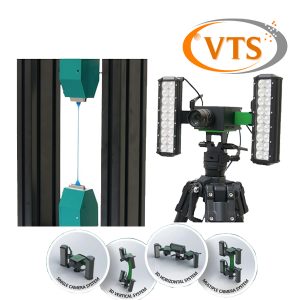
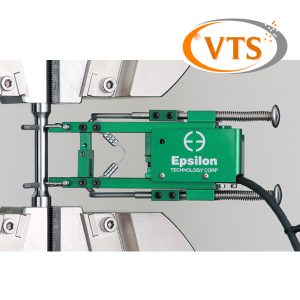
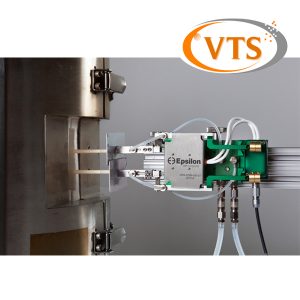
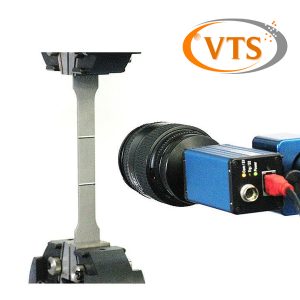
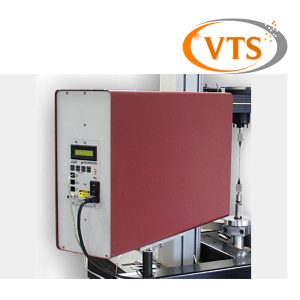
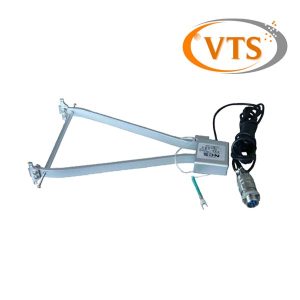
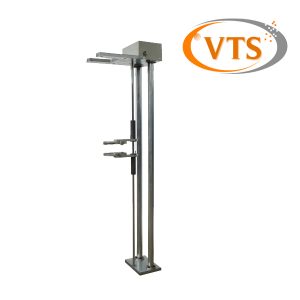
An extensometer is a precision instrument used to measure the mechanical deformation (strain) of a material under stress, such as elongation or compression, thereby revealing properties such as Young’s modulus, yield strength, and tensile strength. It can be directly mounted on the specimen or measure length changes using non-contact methods such as video or laser, providing more accurate data for material testing in engineering and scientific fields than machine crosshead displacement.
Working Principle:
Strain Measurement: It calculates strain (deformation) by measuring the change in length within a specific “gauge length” on the test specimen.
Types:
Contact Extensometers: Physically clamped onto the sample (e.g., clip-on extensometers).
Non-contact Extensometers:
Measure deformation optically using a camera (video extensometer) or laser (laser extensometer), ideal for sensitive materials or high-temperature environments.
Applications:
Used for tensile, compression, and bending tests of materials such as metals, plastics, composites, and films, conforming to standards such as ASTM/ISO.
Main Functions:
Determining elastic modulus, yield point, and total elongation.
Measuring transverse strain and Poisson’s ratio.
Providing accurate and reliable data independent of testing machine components.