Charpy Impact Tester
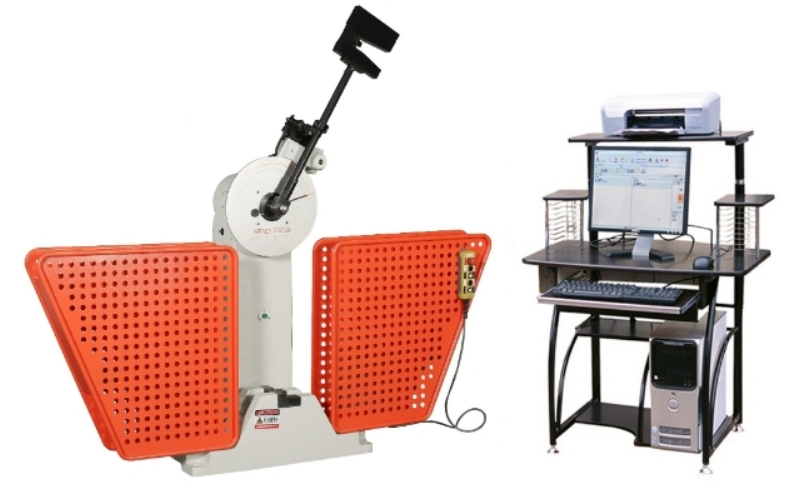
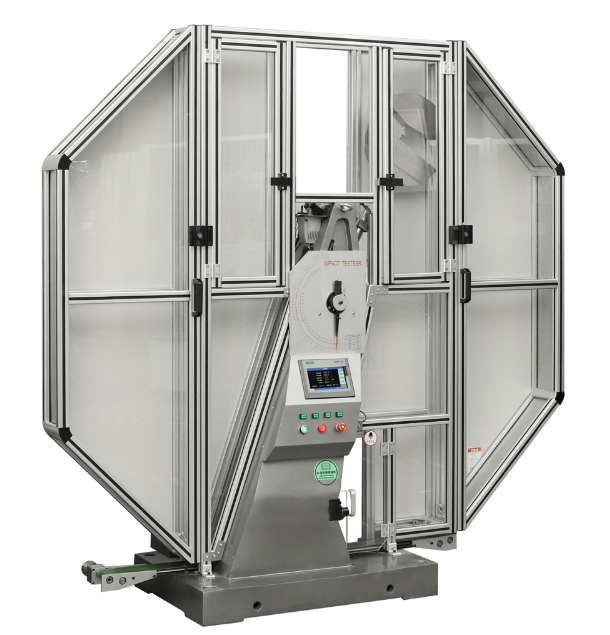
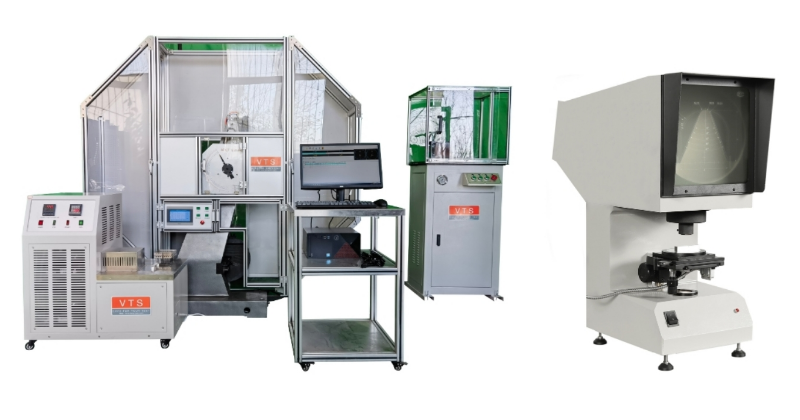
Charpy Impact Tester/Testing Machine
(Impact energy: 300J, 450J, 600J, 750J)
The is a standardized test method for determining the toughness of materials under impact loads, widely used in the performance evaluation of materials such as metals and plastics. Its core standards include ISO 148-1 (international standard), ASTM E23 (American standard), and GB/T 229 (Chinese standard). The following are key points:
Test Principle: A pendulum impacts a notched standard specimen, measuring the energy absorbed at fracture (KV or KU value), typically in Joules (J).
Specimen Requirements:
Standard dimensions: 55 × 10 × 10 mm (length × width × thickness), with a V-shaped or U-shaped notch in the center.
Notch accuracy: V-shaped notch angle 45° ± 2°, depth 2 mm ± 0.1 mm; U-shaped notch radius 1 mm ± 0.07 mm.
Test Conditions:
Impact velocity: Typically 5-5.5 m/s (e.g., 5.2 m/s as specified in ISO 148-1). Temperature Control: Low-temperature testing is possible (e.g., -196℃ to room temperature), requiring liquid nitrogen cooling.
Result Interpretation:
Higher absorbed energy values indicate better material toughness.
Fracture morphology analysis (e.g., fibrous/crystalline) can help assess brittleness tendency.
Application Scenarios:
Metallic Materials: Evaluating welded joints and the effects of heat treatment processes.
Engineering Plastics: Comparing the impact resistance of different formulations.
Precautions:
Specimen notches must be strictly processed according to standards; otherwise, the data will be invalid.
The testing machine needs regular calibration (e.g., pendulum energy error ≤ ±1%). We currently have a notched impact testing machine in stock, computer-controlled, with an impact velocity accuracy of 5.2 m/s, conforming to ISO/ASTM standards. Contact us for the best solutions.