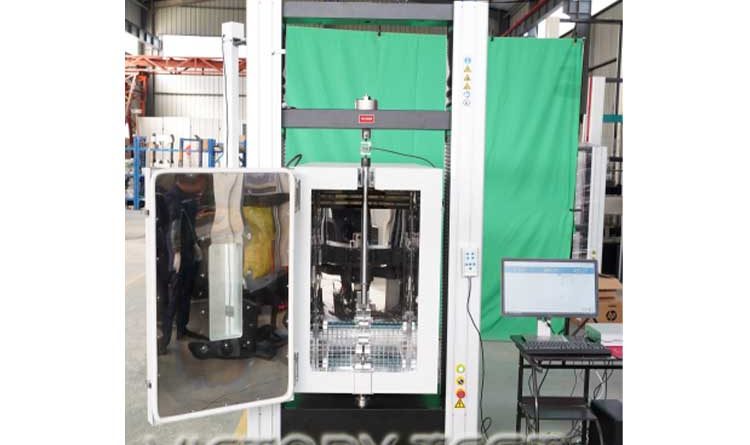
Application de la machine d'essai de traction à haute et basse température ASTM D412 dans les essais de traction des élastomères
Application de la machine d'essai de traction à haute et basse température ASTM D412 dans les essais de traction des élastomères
Application of high and low temperature tensile testing machine in elastomer tensile testing under ASTM D412 standard
How to perform elastomer tensile testing? Norme de référence ASTM D412 Évaluation des performances des matériaux vulcanisés (thermodurci) les caoutchoucs et les élastomères thermoplastiques sont essentiels à la fabrication de produits de consommation et de matériaux hautement spécialisés. Des pneus aux joints toriques des vaisseaux spatiaux, ces matériaux jouent un rôle important dans divers domaines.
Dans cet article, we will discuss the tensile testing of elastomers under the ASTM D412 standard and introduce the materials, testing equipment, software and specimens required for testing. By understanding the ASTM D412 standard and related test methods, we can help you better evaluate and compare the tensile properties of different materials, and provide a more reliable basis for product design and material selection.
1. Test standards
Refer to ASTM D412 standard.
2. Test scope
ASTM D412 measures the elasticity of a material under tensile strain and how the material behaves when it is no longer under compression at the end of the test. En même temps, a variety of different tensile properties can also be measured, the following are the most common:
1. Tensile strength – the maximum tensile stress required to stretch a specimen to rupture.
2. Tensile stress at a given elongation – the stress required to stretch an equal section of the specimen to a given elongation.
3. Ultimate elongation – the elongation at which fracture occurs during continuous application of tensile stress.
4. Tensile deformation – the extended length that the specimen maintains after it has been stretched and can be retracted in a specified method, expressed as a percentage of the original length.
3. Test instruments
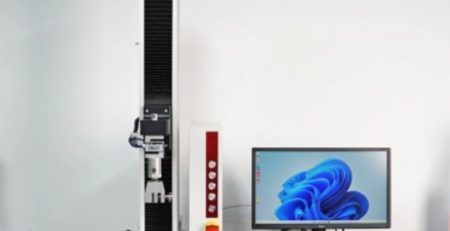
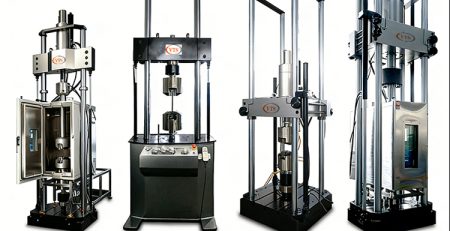
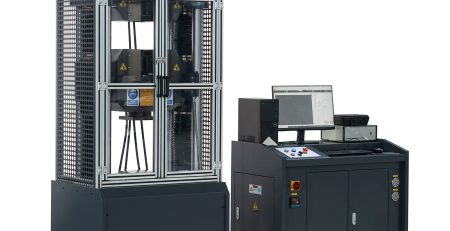
1. High and low temperature universal tensile testing machine.

Elastomers tested to the ASTM D412 standard are generally intended for future use under non-ambient conditions. Because environmental conditions have a huge impact on the tensile properties of elastomers, care must be taken to ensure that test conditions simulate those of the intended end application. Vitesse de test, température, humidité, specimen size and pre-test conditions all have a significant impact on test results and must be controlled to obtain useful test data. To ensure that these elements simulate the material’s final application conditions,
2. Non-contact video extensometer
Since the specimen has poor rigidity and needs to be tested in high and low temperature environments, the contact extensometer is prone to slipping and is difficult to clamp. For the most accurate and repeatable results, strain measurements are recommended.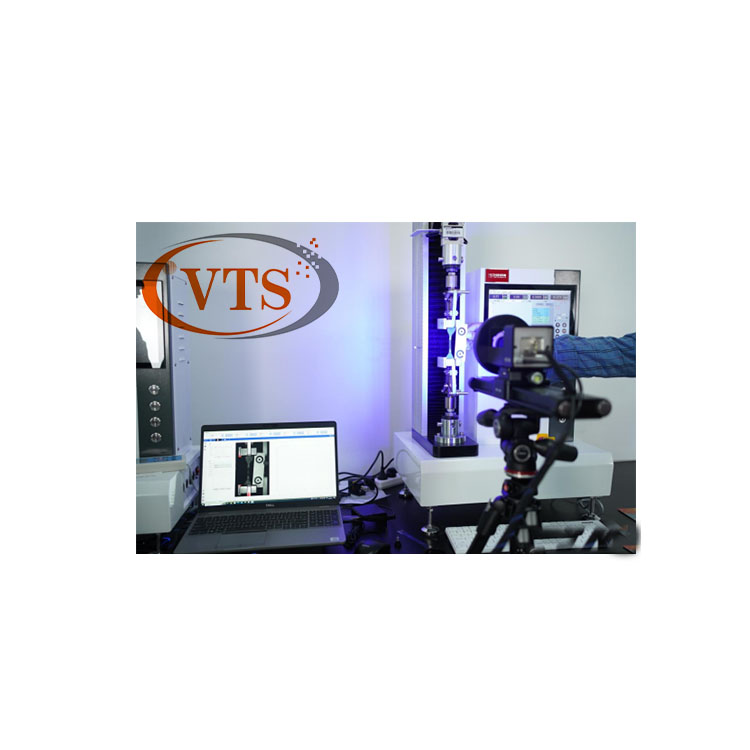
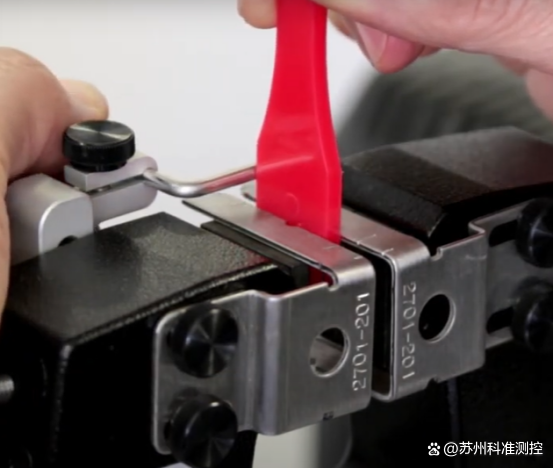
3. Pneumatic side-action clamp or self-tightening eccentric clamp: As an elastomer specimen is stretched, its thickness will become thinner. Donc, ASTM D412 recommends the use of self-tightening clamps. Uniform pressure across the clamp faces ensures that thinned specimens do not slip out of the clamps during testing. The serrated side-actuated pneumatic clamp is very efficient in testing elastomers. With pneumatic clamps, the inlet pressure automatically adjusts so that the clamping force remains constant even if the specimen thickness changes significantly during testing. Another effective method is to use self-tightening roller clamps, which use springs to apply constant pressure to the specimen under test.
4. Micrometer (measurement of specimen)
To ensure compliance with the standard, all specimens used for ASTM D412 testing are measured with a micrometer in accordance with ASTM D3767.
5. Processus de test
1. Preparation of samples
ASTM D412 describes two test methods based on specimen type.
Sample 1: Use a “dumbbell” ou “dog bone” shaped sample
Sample 2: Ring sample
Dogbone specimens must be die cut from injection molded sheet or plaque stock. The direction in which the sheet is extruded is important as a light grain pattern will develop on the material. To ensure consistency, all specimens should be cut lengthwise parallel to the grain.
2. Measurement of specimens
ASTM D412 testing has six acceptable dog bone specimen types and two acceptable ring cut specimen types. The longest shape tested was a die-cut C-shaped dog bone specimen with a required overall length of 115 mm (longueur de jauge 25 mm), a width of 6 mm, and a thickness of 3 mm. The thickness of the specimen must be measured three times and the median value taken.
3. Alignment of specimen
For proper testing, the specimen must be perpendicular to the clamp face and cannot be tilted at an angle. Specimen misalignment can cause significant changes in test results, so steps must be taken to ensure that specimens are aligned consistently for each test.
6. Operation steps
Installation of the specimen: Place the specimen vertically on the clamp surface, ensuring that the specimen is parallel to the clamp surface and not tilted at an angle. Aligning the specimen is a critical step to ensure accurate and reliable test results.
Using a high and low temperature universal testing machine: Set the testing machine parameters, including test speed, température, and humidity, to simulate expected end application conditions. Select an appropriate test speed (usually 500 mm/min) according to the requirements of the ASTM D412 standard.
Use a non-contact video extensometer: For accurate and repeatable results, it is recommended to use a non-contact video extensometer for strain measurements. This can avoid the problems of easy slipping of contact extensometers and difficulty in specimen clamping.
Use pneumatic side-action clamps or self-tightening eccentric clamps: Choose clamps that tighten automatically as recommended by the ASTM D412 standard. Pneumatic side-action grips and self-tightening eccentric grips are effective options to ensure a stable grip on the specimen during testing.
Start the test: Start the high and low temperature universal testing machine and start applying tensile force at the set test speed until the sample breaks. During this period, the tensile force and displacement data of the specimen were recorded.
Data analysis: Based on the test results, the tensile property parameters of the specimen such as tensile strength, allongement à la pause, and elastic modulus are calculated and evaluated.
The above is the content of the elastomer tensile test introduced under the ASTM D412 standard. J'espère que cela peut être utile à tout le monde! If you want to know more about elastomer performance indicators, testing equipment (high and low temperature universal tensile testing machine), TPE physical property testing items and methods, and TPU tension and tensile testing, etc., Vous êtes invités à nous suivre, or you can send us a private message Leave a message and the VTS technical team will answer your questions for free!
Pour des informations plus détaillées, veuillez nous contacter par email: andy@victorytest.com
Mobile & WeChat & WhatsApp: +86-15305307234